

The Idea
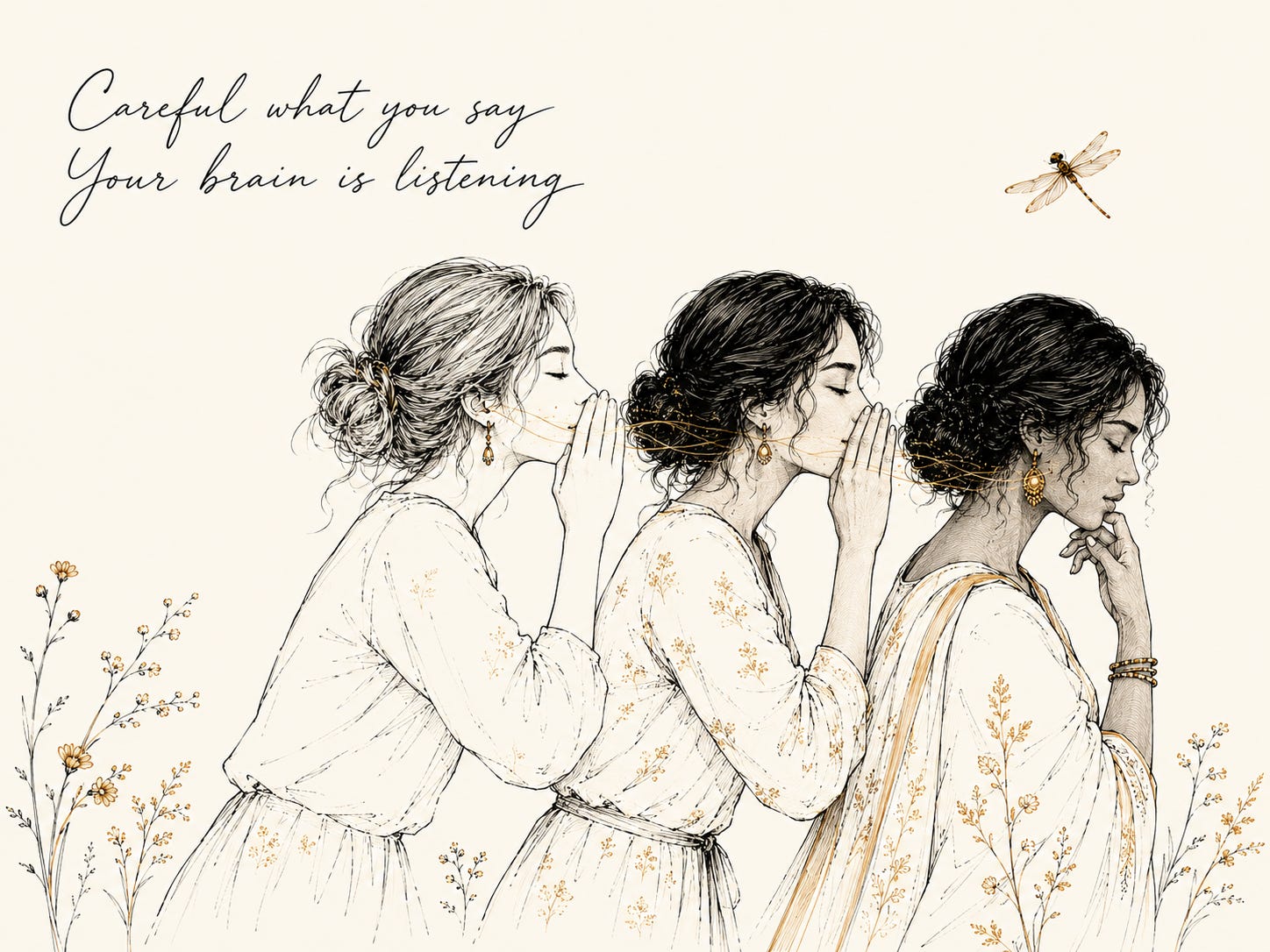
The kettle had just gone off in the kitchen, and I was on the sofa waiting for my chai, half in the conversation and half out of it. My cousin stepped out to take a call, and before the door was even shut properly, the room turned.
She never stays in touch to see how we are.
She doesn’t even cook for her husband.
She’s the reason they don’t have children.
You know this scene. And if you’re honest, you’ve probably taken part in it.
I have too.
One comment lands and you add one of your own.
I sat there that day feeling like I was having an allergic reaction to the whole thing, itching to get out of the room. So I left.
But on the way home I kept thinking about something that bothered me more than what had been said about my cousin.
I’d said something too.
And I couldn’t work out why.
The Science
Gossip feels good. There’s a reason for that.
Brain imaging studies show that sharing information about someone else triggers a release of dopamine, which is the same chemical the brain releases when you eat something you love or hear good news.
But there’s more going on here.
Research shows that gossip activates both the brain’s reward centre and its stress centre simultaneously. While the dopamine is firing, your amygdala — which is the part of the brain that scans for threat — becomes overactive. At the same time, your prefrontal cortex, which is responsible for clear thinking and focus, starts to lose efficiency.
You get the hit of pleasure and the cost of arousal at the same time. Which is why a long gossip session can leave you feeling strangely drained, even though it felt good while it was happening.
And then there’s the hidden consequence of what you’re doing to yourself.
When you regularly speak negatively about people, you’re actually training your brain to look for what’s wrong first. Not only in others, but in yourself too. You literally become someone who sees all people as a threat.
And here’s the part most people don’t talk about. Gossip is the most memorable type of information the brain encounters, more memorable than facts. Brown University found that the brain’s approach to spreading gossip resembles the same algorithms that drive viral content on social media.
When someone hands you a negative story about a person, your brain stores it deeply and your instinct is to pass it on.
Which is kind of like how a virus works.
Where It Shows Up
At a coffee catchup with a friend that starts as a check-in but quickly turns into an hour about someone else entirely. You try to offer a new perspective. But they don’t really want advice, they just want to vent. The conversation gets louder and more charged. By the time you leave, you’re drained and promise yourself to not see them again for some time.
On the train home after a productive day at work, you overhear two colleagues who are not so quietly talking about their day and complaining about a particular person. You shake your head and pop your headphones in, frustrated that they’re investing their time badmouthing someone instead of talking about something they were thankful for.
And then there’s the family group chat, or the phone call that starts with “did you hear about so and so?” This conversation is the worst kind because it pulls the person apart in what should be a safe space - family. By the end of the call you’ve been handed the same story, the same judgment, the same way of seeing that person.
The Subtextt
Beneath the feeling of dopamine is the fact that we’re living within a social virus.
We think gossiping is harmless, but words are not just sounds. They carry the energy of the person speaking them.
That energy gets passed on — to the friend at the coffee table, the colleague on the train, the family member on the phone — and with it a dose of criticism gets transferred to an unsuspecting brain.
The more you repeat it, the more you harm them. They go home seeing the world a little more negatively.
And so it spreads, one conversation at a time, like an epidemic.
The person being talked about doesn’t even know the conversations are happening.
But you do.
Do better, the brains in this world are relying on it.