

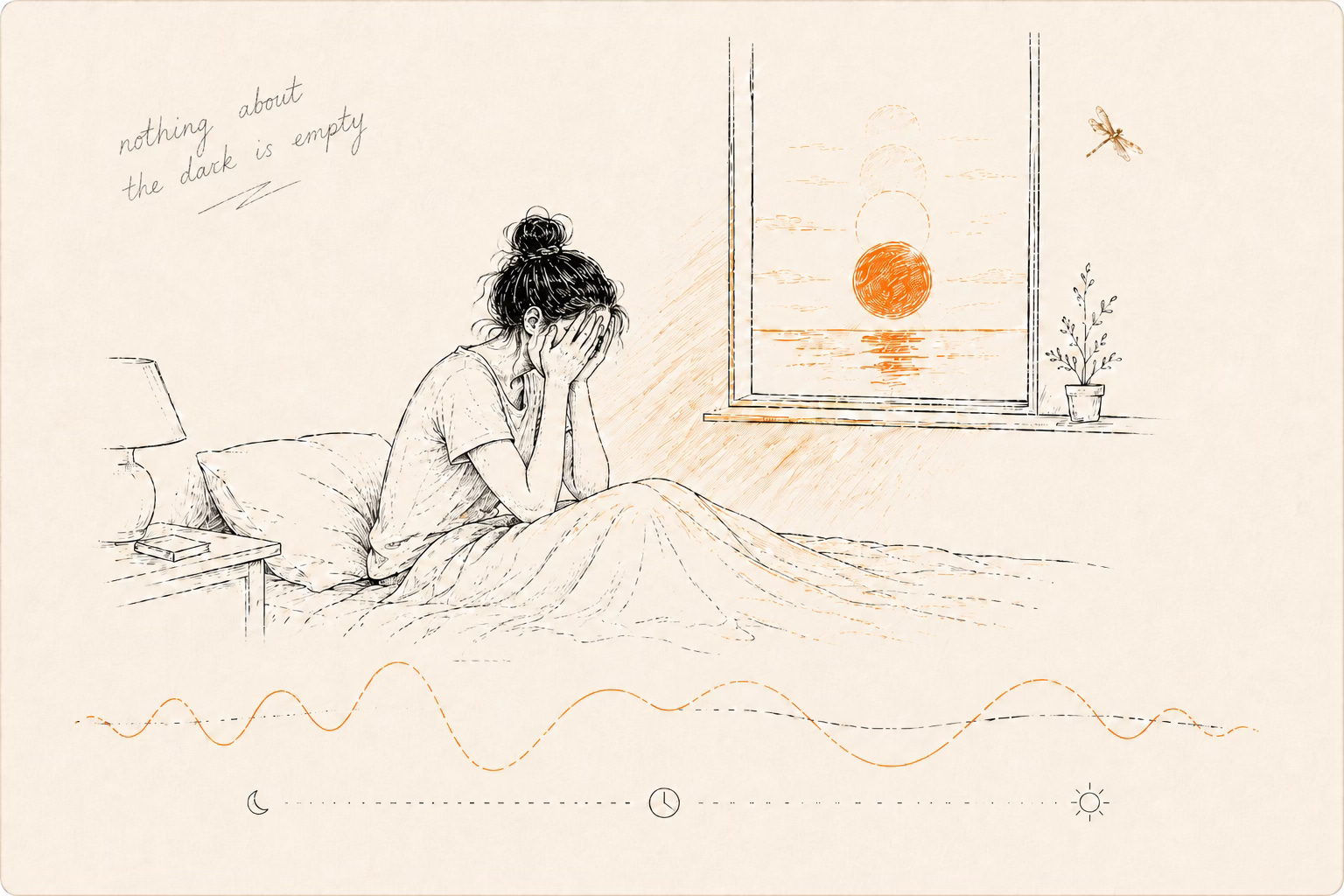
The Idea
I love Isaac Asimov’s Nightfall, it’s one of my favourite sci-fi novels about how a civilisation unravels completely when their world plunges into darkness for the first time.
On planet Kalgash, six suns keep the world in constant daylight. So when an eclipse plunges the world into shadow for the first time in over two millennia, the people don’t just panic. They come apart.
The Science
This story isn’t about the darkness itself, but the idea that it was unfamiliar. The people of Kalgash were destroyed by the shock of seeing the night sky and its stars for the first time.
It’s an ironic reversal of how we tend to think about things here on Earth. We worry about not having enough sunny days, but what if every day was constant sunshine?
Day 1: The Sun Doesn’t Set
The first thing that you’d notice is how long the day feels. With no shift in daylight to tell your brain it’s time wind down, you keep going a bit longer than you should.
You feel oddly energetic at times, starting projects at 2am without meaning to. That’s your cortisol elevated because your brain can’t locate the end of the day. And without darkness, your brain doesn’t know when to begin releasing melatonin, the hormone that responds to shadow and eases you toward sleep.
So you lie in bed waiting to feel tired, eventually falling into a shallow sleep that’s easily broken by the smallest sound. You wake unrefreshed and do it all again.
Day 30: Profiting From Light
A month in, the problem has a consumer market.
It starts small. Blackout blinds sell out first, followed by smart lighting systems that promise to restore your night by dimming your home in carefully timed stages. Offices roll out the same systems, softening light in the late afternoon to help you wind down.
Artificial night becomes a subscription feature. Your phone, lights, and laptop all shift together to coordinate something your body might accept as an ending to the day.
Pharma move in quickly, first with melatonin patches, then IV treatments for people who need more lasting results. Clinics open promising deep sleep restoration in controlled environments where light, temperature and sound are all carefully managed to help you sleep.
Somnus AI underpin it all. They start by launching wearables that track your light exposure, your sleep patterns, how often you wake, how long it takes you to fall asleep, how your focus drops across the day. It pulls it all together into a single personalised model that predicts when you should be winding down, even if you don’t feel it yet. Over time it stops suggesting and starts deciding.
In some cities, it goes further. AI systems begin controlling infrastructure by reducing public lighting in residential areas at set hours, limiting digital billboards, dimming transport hubs.
Darkness becomes something that has to be produced. And your sleep becomes something you have to optimise and pay for.
Day 90: Governments Step In
Three months in, time as you know it has changed.
Living in constant light has altered your body’s natural ability to keep time. Coherent thought is harder to hold onto. Your focus doesn’t stay where you put it. Conversations have lost their sharpness. Cortisol rises at odd hours. And your body temperature, which normally drops at night to help you sleep, has lost its rhythm entirely.
People start calling it a pandemic, because no one is unaffected.
Governments step in once productivity starts falling. Guidance becomes policy. Homes are required to install certified blackout systems, and buildings have enforced night modes that can’t be overridden. Public health campaigns push the idea of protected dark hours as a basic human necessity.
But most of this runs through Somnus AI, who already have the data. The same systems people adopted a month earlier are now feeding into national policy. Your light exposure, your sleep patterns, your focus levels are all being tracked, and quietly standardised.
It helps a little. Some people report better sleep, but something has shifted permanently, and the cumulative exhaustion of months without real darkness has left a mark that optimisation alone can’t fix.
Day 365: The Long Unravelling
A year in, the effects are no longer just physical.
The loss of natural rhythm has done something subtler - it has flattened time itself. Without the punctuation of night, days blur into each other. People struggle to remember what happened yesterday versus last week. The emotional processing that happens during deep sleep has been quietly disrupted for twelve months.
Some people describe it as a persistent strangeness. A growing sense that something is slightly off, and has been for a long time.
Kalgash, it turns out, wasn’t so far from home after all.
Where It Shows Up
Although this sounds like a very cool Black Mirror episode, this isn’t entirely speculative. In regions of our planet where the sun barely sets for months, like Antarctica, Norway, and northern Finland, studies have shown that adults genuinely struggle to sleep, concentrate, and regulate their moods without natural darkness.
Melatonin production drops measurably. Rates of anxiety and depression rise. The body, deprived of its most fundamental cue, begins to lose its timing in ways that compound over weeks and months.
The research suggests it doesn’t take long. A few weeks of disrupted light exposure is enough to affect cognitive performance and emotional regulation in otherwise healthy adults. The body is more dependent on darkness than most of us ever think to notice.
The Subtextt
Beneath the feeling that nothing happens when you sleep, is the fact that your body is doing its most important work. The dark deserves more care than we give it for this reason alone.
The night is when everything slows down enough to process the day. To rest, to reset, to file away what happened. Without that contrast and natural pause, you lose something entirely essential.