

The Idea
A few years ago I moved to Sydney and fell apart.
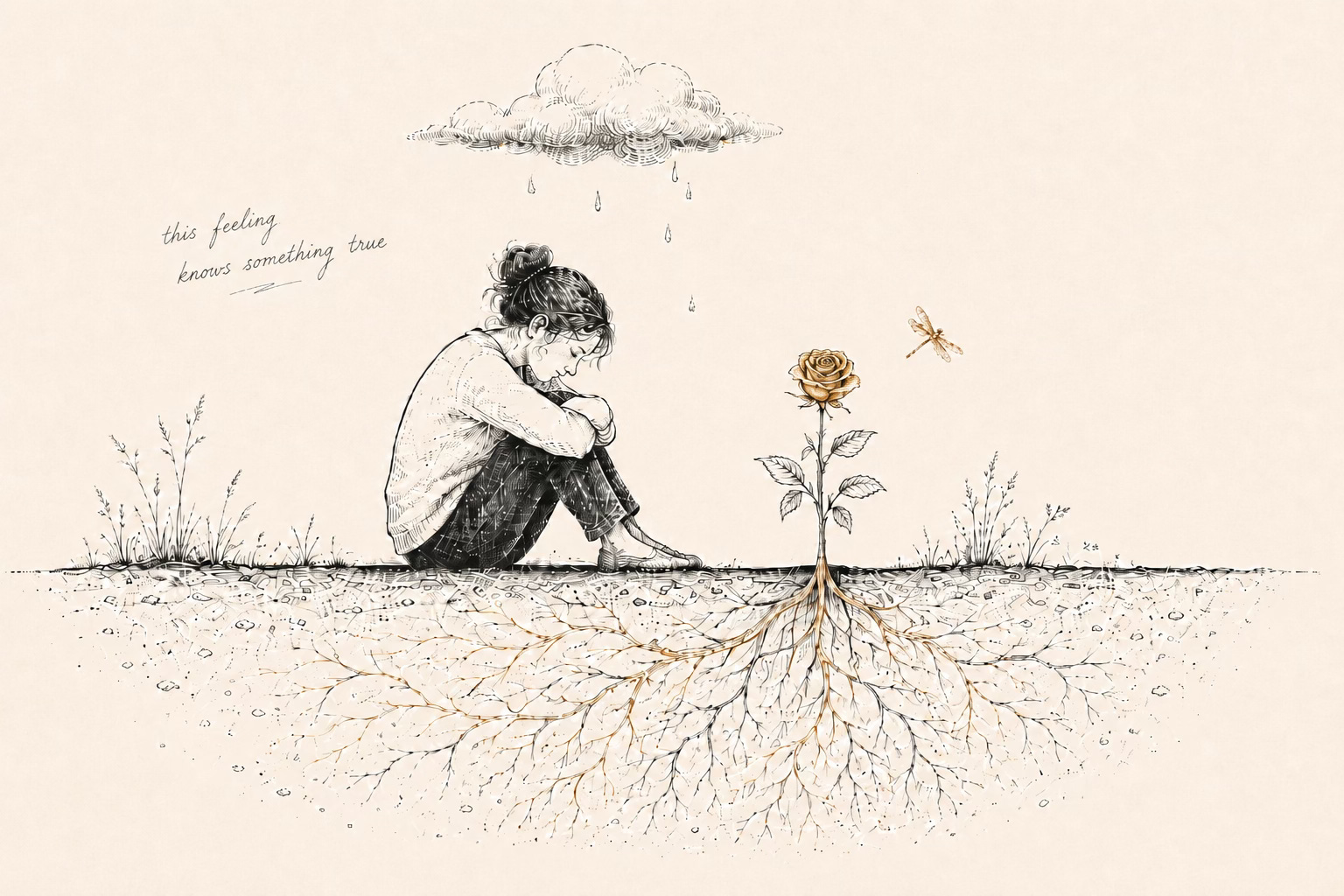
Everything that had defined me — my career, my income, my sense of purpose — vanished almost overnight. I spent months walking the city under a heavy low, wondering if what I was feeling was something I could fix. Or delete.
That question led me to the edge of genetic science, where researchers are asking the same thing.
Gene editing is a technology that cuts and rewrites biological instructions in your DNA, and it’s already changed medicine, offering a single treatment for sickle cell disease and a potential cure for inherited blindness. The science is extraordinary.
But some researchers want to go further. They want to edit out depression. And the closer you look at that idea, the more complicated it gets.
The Science
Gene Editing uses a guide molecule to locate a specific sequence in your DNA and acts like a pair of molecular scissors - cutting out or replacing that section of code.
But while you can cut and paste a fix for a blood cell, the mind is a different beast entirely. Our moods aren't usually the result of one broken gene, they’re a living reaction to our environment.
This is where epigenetics comes in. While your genetic code is fixed, the way those genes actually behave is constantly changing. Chemical markers sit on the surface of your DNA like a control system, switching specific genes on or off based on your environment, your experiences, and stress levels.
A major life event, like moving to a new country, can cause these markers to shift, locking a low mood setting in place and suppressing the brain’s natural ability to balance itself.
Researchers at institutions including the NIH and companies like CRISPR Therapeutics are lab testing gene editing approaches that could one day offer an alternative to traditional antidepressants. Moving away from masking symptoms with a pill toward something more permanent.
The goal is to reactivate the suppressed genes rather than simply manage them.
Where It Shows Up
Feeling low is natural, and it’s a vital survival tool.
A low mood shifts your mind into a kind of diagnostic mode. It slows you down, narrows your focus, and forces you to pay attention to what isn’t working. Without it, you might stay in harmful or painful situations, because the internal signal telling you something is wrong would never sound.
This isn’t a new idea. Thinkers like Socrates and Plato argued that a life without struggle would be a life without true understanding. They believed our internal conflicts and emotional trials are the labour pains of the soul, necessary for giving birth to wisdom. Suffering, in their view, wasn’t something to be escaped. It was something to be moved through.
You only have to look at what suffering has produced to understand what we would be trading off. The blues was born from pain so concentrated it needed a new musical form to hold it. Jazz emerged from the same. Shakespeare’s greatest works, Hamlet, King Lear, Macbeth, are all studies in human anguish. Sylvia Plath, Frida Kahlo, Nina Simone, their most enduring work came directly from the depths of their own experience. These were people who showed us that suffering and greatness were the same thing.
By removing low moods we wouldn’t just remove pain, we’d remove critical information that pain carries.
The Subtextt
Beneath the desire to feel better is something worth listening to first.
One of the most profound qualities we have as humans is the ability to translate pain into something beautiful. A low mood is a message, and like all messages it deserves to be read before it’s deleted.
By editing our ability to do that entirely, our lives might seem more comfortable. But how long would that comfort last once we realised we had deleted the very depths of ourselves.