

The Idea
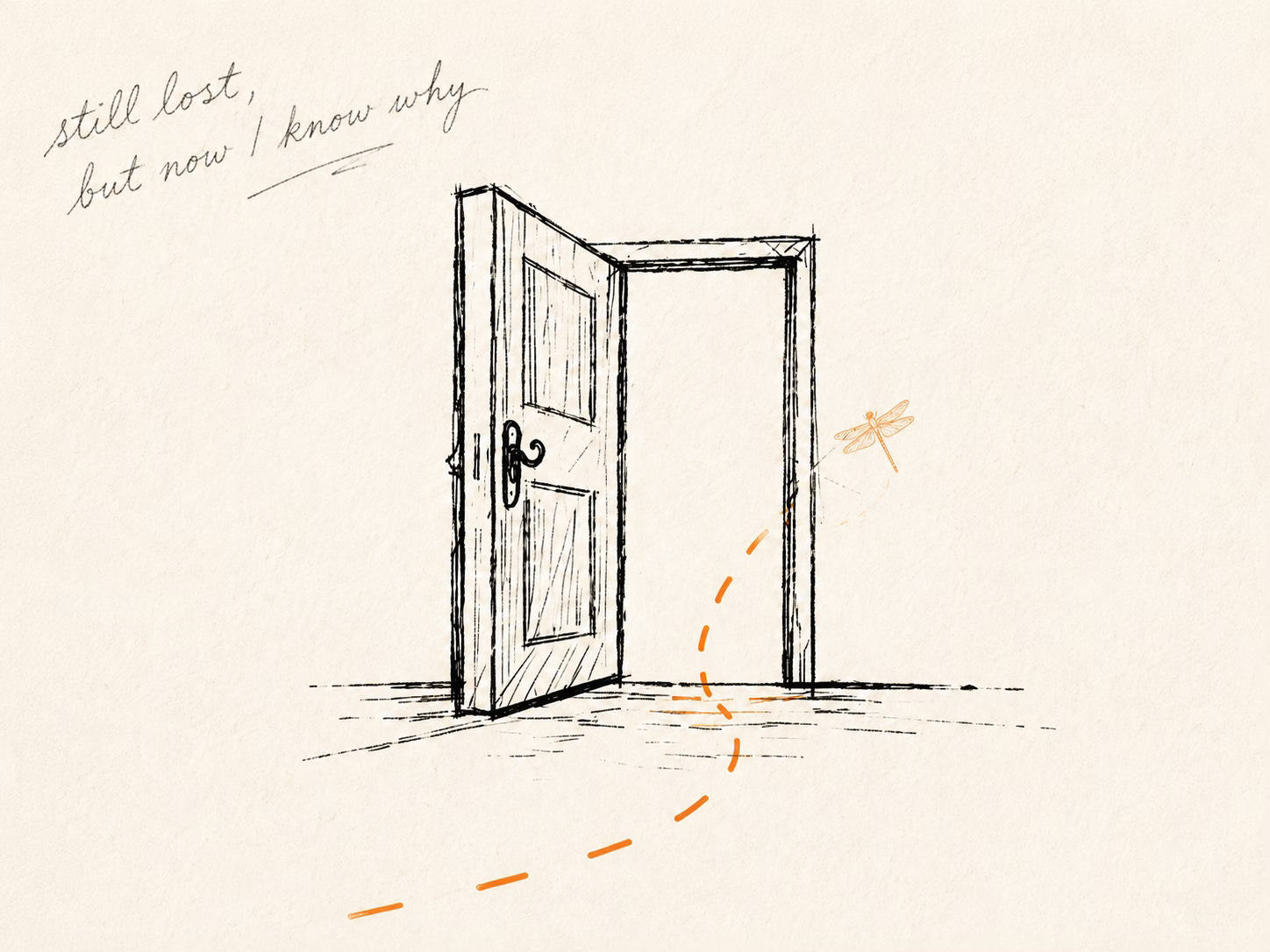
I was talking to my therapist about this sudden urge I get to leave when I’m around certain people. You know the feeling? You’re at dinner, everything seems fine on the surface, but something feels off, and suddenly you’re looking for the door.
I used to think it was because I’m an introvert. But it turns out something else is actually going on. Something deeper that my body is picking up on before my mind has even registered it. It turns out I’m eavesdropping on a conversation happening between my gut and my past.
Once Upon A Time
To understand this, let me start where it begins.
Imagine a little girl who learned early on that her voice was best turned down. In a home that was too loud because the adults were too stressed, she worked out that the safest way to be good was to be invisible.
Sitting quietly in the corner became her superpower. Whenever her environment felt unsafe, her nervous system took over and physically pulled her into herself, creating a tight knot in her stomach. It was a physical shield that let her go unnoticed, and it became her most reliable protector.
Fast forward a few decades. She walks into a room and her gut instantly starts scanning. She picks up on a specific energy that mirrors something from her past, and that same familiar knot forms, warning her to stay quiet, and stay unseen.
She has every right to take up space in that room, but her biology is still trying to protect a version of her that no longer needs to hide.
The Science
There’s a system running in the background that’s constantly scanning her environment for threats, because it’s learned early on that staying alert is the safest way to be.
It’s called the Enteric Nervous System, or ENS. It’s a complex network of around hundred million nerve cells lining the gut, communicating constantly with the brain. Scientists sometimes call it the second brain, because it processes and responds to emotional experience in its own right.
The ENS doesn’t store memories the way your mind does, it stores feelings. It tags certain physical sensations to specific emotional experiences, and once that connection is made, it doesn’t easily let go. Her brain tagged that tight feeling in her stomach as a safety signal long ago. And even though she’s an adult now, the system keeps responding the same way, using old signals to try to keep her safe.
It doesn’t stop to ask whether the threat is still real. It only knows that it once was.
Where It Shows Up
This is one of the most human things you can go through.
Research into somatic memory, which describes the way the body stores emotional experience, suggests that the gut’s responses can be triggered by sensory cues that bear only a passing resemblance to the original experience. It could be a tone of voice, a particular kind of silence, or the way someone moves when they’re annoyed. These micro-signals bypass conscious thought entirely, landing in the body before the mind has had a chance to assess them.
This is why you can walk into a room, feel immediately uncomfortable, and have absolutely no rational explanation for it. Your ENS has already run the pattern match and sounded the alarm, before you’ve even finished saying hello.
Therapists working with somatic approaches, like EMDR, work specifically with this layer of memory. Not by talking about what happened, but by helping the nervous system learn that the old signal no longer means what it once did. It’s slow work, because you’re not changing a thought. You’re trying to update a physical response that’s been rehearsed for years.
The Subtextt
Beneath the urge to leave is your body trying to tell you something.
The trick is knowing how to listen to it.
Rumi wrote about this eight centuries before science had a name for it. He wrote that the human being is a guest house, and that every morning a new feeling arrives at the door. He said to welcome them all, even the difficult ones, because each one has been sent as a guide.
That urge to leave the room before you know why - that’s a guest that arrived before you could think. Your gut got there first. And the most useful thing you can do isn’t to leave, or to push the feeling down, but to pause long enough to ask what it came to tell you.