

The Idea
I’d been going to the same dumpling restaurant for a year.
Lai knew my name and my order by heart, so I sat at my usual table.
Six dumplings, steamed, the skin thin enough to see the green of the vegetables through it. They came out too hot to touch, drenched in chilli and soy sauce.
So I waited.
They were soft all the way through, giving way completely.
I finished all six and got up to pay.
So delicious! See you tomorrow, Lai!
We bowed, like we had done so many times before. Just for a few seconds, bending at the waist, back completely straight, one hand on top of the other.
I didn’t notice until I was halfway home, but something had gone quiet in me.
What had I just put down in that bow?
The Science
Bowing is a language. And in this language, depth is everything.
Across many cultures, lowering your head or upper body is used to show respect, gratitude and deference.
In India you press your palms together and dip your head. It’s known as Namaste, which means bow to you.
In Thailand the same gesture is called the Wai, which has origins in Buddhism and the Anjali Mudra. A slight bow, with palms pressed together as if in prayer.
And in Buddhism the same palms-together is called Gassho. The full version of it goes to the floor. You lower your forehead, turn your palms upward, and lift them above your head. The gesture means you are holding the Buddha’s feet higher than your own.
Whatever the culture, the intent is clear. The lower your head, the more it means. But there’s something more happening when you look at the movement more closely.
In Japan, the depth of the bow can change its meaning entirely. A small bow acknowledges another person, while a deeper one communicates greater meaning.
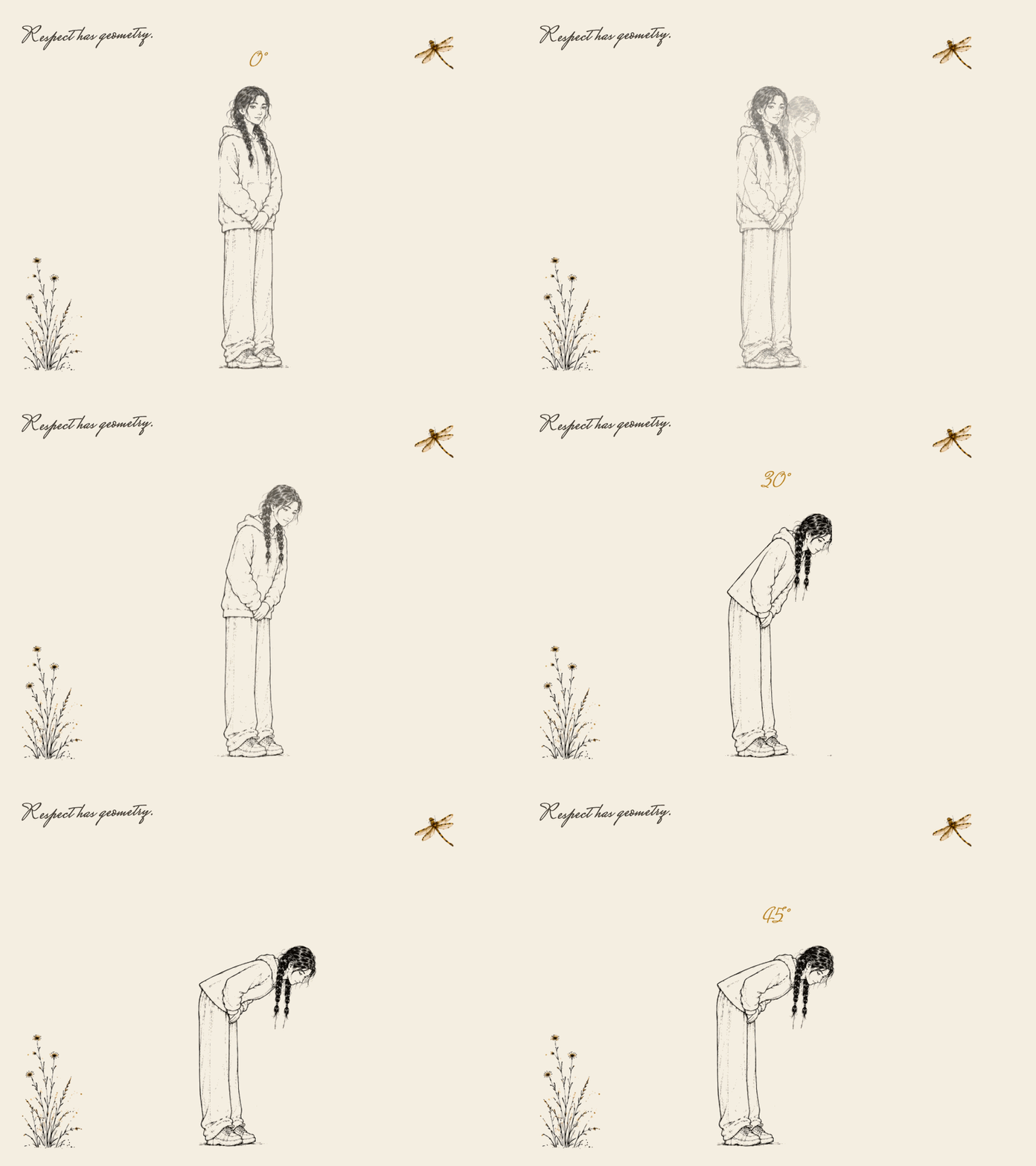
0° = we are equal
Meeting at the same height.
15° = I see you
Eshaku. A small bow to casually acknowledge another person.
30° = I respect and appreciate you
Keirei. A lower bow that gives the moment more attention.
45° = I deeply honour you, or I am deeply sorry
Saikeirei. A bow kept for apology, gratitude, or reverence.
As the angle increases, the body gives up more of its height for respect to rise. This is the exact opposite of what you naturally associate with power - where you’re told to stand tall, lift your chin and take up more space.
In fact deliberately lowering your head and body can help you feel more humble. Research has shown that downward, more contracted postures are associated with greater humility than upward ones.
That makes a bow much more than just a polite gesture.
For a moment, you willingly set your ego aside to let humility in and say I honour you.
Respect has geometry.
Still reading? Subscribe for more free posts - one thoughtful five-minute read, once a week.
Where It Shows Up
When you bow your head before eating dinner to give thanks for the food in front of you. The movement stops you treating the meal as something you’re owed to something you’re grateful for.
When you attend a meeting and instinctively offer your hand, only to notice that everyone else has bowed, so you follow their lead. The exchange leaves you humbled and tall at the same time.
And when you greet an elder in the family. The gentle gesture shows that you greatly recognise the value of their experience.
The Subtextt
Beneath the feeling of quiet is the truth that we spend our lives climbing to earn respect. A bow does the opposite.
While we are taught to protect our height, hold our ground and never make ourselves small, true respect begins when you stop needing to be above the person in front of you.
A bow shows that you can lower your body without lowering your worth.
And that’s the strange arithmetic of it all. When you minus your ego, respect adds up.