Why you turn against yourself for the people you trust
How another person’s insecurities shape your personality.
 Niki Virdee
4 min read
The Idea
I was still smiling when my favourite class ended.
Things with my boyfriend at the time had been hard for a while, and I hadn’t realised how much I’d missed feeling happy.
It was the one place I still felt like myself. We were learning how computers might one day understand signals from nature. Part of me hoped it might help me to understand myself, too.
Kim and I were walking down the stairs, when I heard it.
“Oh my god, she’s so skinny. What’s wrong with her?”
A group of girls had just passed us, staring as they went.
They’re talking about me.
I stopped and looked back. They were laughing.
My face turned red.
Should I turn around and say something? Or pretend I didn’t hear it?
Their words took me straight back to him.
I could hear my boyfriend’s voice. “She’s got a nice figure, hasn’t she?”
I remembered looking down at my body.
Embarrassed.
Ashamed.
Less than the person I used to be.
He carried on looking at her like she was brand new.
Maybe if I made myself into her…
“…You’re beautiful as you are.”
I blinked.
Kim was looking at me.
“Sorry, what?”
“I said, just ignore them. You’re beautiful as you are.”
I looked back towards the girls, they were still laughing.
“Yeah, I know”. I said trying to smile.
But I didn’t know.
I’d spent so long believing what he said about me that my mind had turned into a constant battle of his words against mine. And it had left me thin and drawn.
I just want to be enough.
“Come on,” Kim said.
I quickly followed her down the remaining stairs, keeping my head down. Hiding my eyes that were filling with tears.
I wondered if I should tell my boyfriend what had happened. Perhaps he’d say to not to listen to them. But I could already hear him telling me that I’d brought it on myself.
He’s right, this is all my fault.
There was no point in telling him. I’d only end up feeling worse.
And as I walked home, I kept thinking about all the comments he’d made about my body. I missed the old confident me that he’d slowly taken away from me.
For some reason I still believed his words over my own intuition.
How could the person hurting me become the one I trusted most?
Enjoying this? Get a new story every Thursday.
Subscribe free →The Science
My relationship had been shaping how I saw myself for a long time before that day.
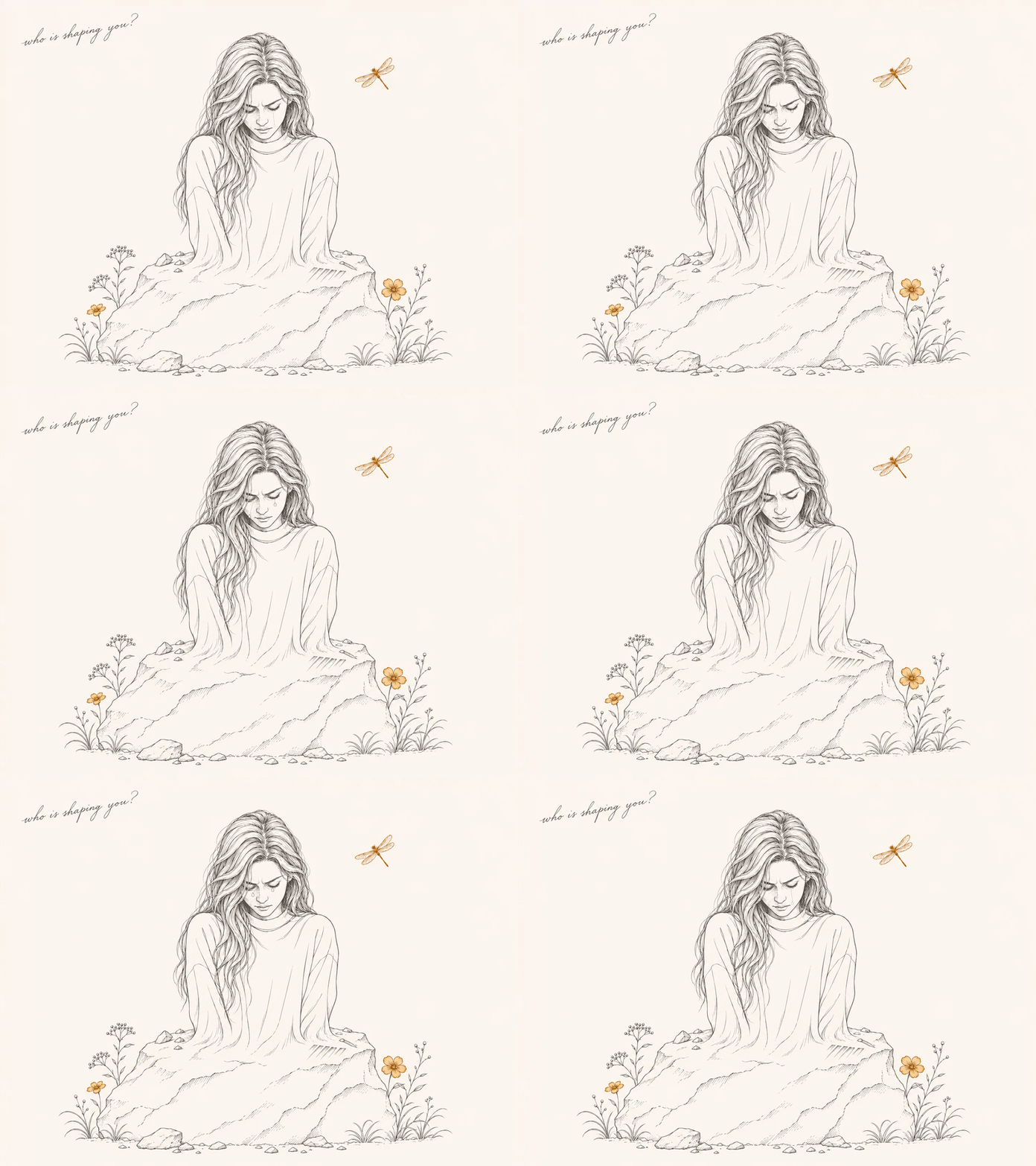
The Michelangelo phenomenon is named after the way Michelangelo described sculpting, as chipping away at stone to free the figure inside.
In 1999, researchers used that same idea to explain how the person closest to you shapes who you become.
In a healthy relationship, the person holding the chisel shapes you towards the person you want to be. But in an unhealthy one, the chisel is pointed at the wrong things. Things like disapproval instead of support, doubt instead of belief, and praise for qualities that are the opposite of who you want to be.
The researchers described how your partner will form an opinion on what you’re good at, what you’re capable of, who you could become. That opinion shows up in how they treat you. And that repeated treatment is what changes you.
And it’s achieved in three ways.
The first is how they react. They’re warm when you do what they like, and they go quiet when you don’t. So you start doing more of what keeps them happy.
The second is how they act around you. They’re critical and make sure you hold yourself back. Eventually, you stop sharing your ideas and speaking up.
The third is the moments they set up. They curate situations that bring out one side of you more than another. You start being put in situations that makes you look useless.
So you adjust.
In each moment, you shift a little to fit the way you’re being treated. And you hold back the things that get criticised and lean into the things that get approval.
And because we share so much of our lives with those we trust, the effect happens across hundreds of small moments. Over time, those adjustments settle into your personality, your values and your habits. Eventually they start to feel like who you are.
So why would someone you love do this to you?
Well. there are three common reasons: to release their own anger and frustration, out of jealousy, and because they can’t put what they feel into words.
So when he compared me to other women, it may have been this coming out. And every time it did, it chipped away a little more of my confidence.
Which is how someone I loved convinced me I was the person he said I was.
Where It Shows Up
When you go out with friends without him. He’s fine when you leave, but cold for two days after your back. The next time they invite you, you say you’re busy.
When you tell a parent you’re moving out. They calmly say you don’t care about them. That weekend, you unpack the boxes you’d filled, and by Sunday your favourite dinner is on the table.
When you’re early in your career and share your ambitions with a leader. She says a role like that isn’t built for a woman, and she’d hate to see you fail. The next time someone asks, you name something smaller.
The Subtextt
Beneath the feeling of shame is the truth that the person making you feel less can never make you less.
That day on the stairs, a group of strangers could see the burden I couldn’t yet admit I was carrying.
We trust the people we love to help us become who we want to be. And because we trust them, we can miss the moment they start holding us back from ourselves instead.
But what they change is how we see ourselves. Never who we are because it’s not in their reach.
Manipulation, then, works by convincing us that what’s been hurt has been lost. The manipulator believes it too, thinking that because they can hurt someone, they can make them less of a person.
But the only person they ever make less is themselves.